The EvalScribe Teacher Evaluation Blog — AI, Frameworks, & Observation Tips
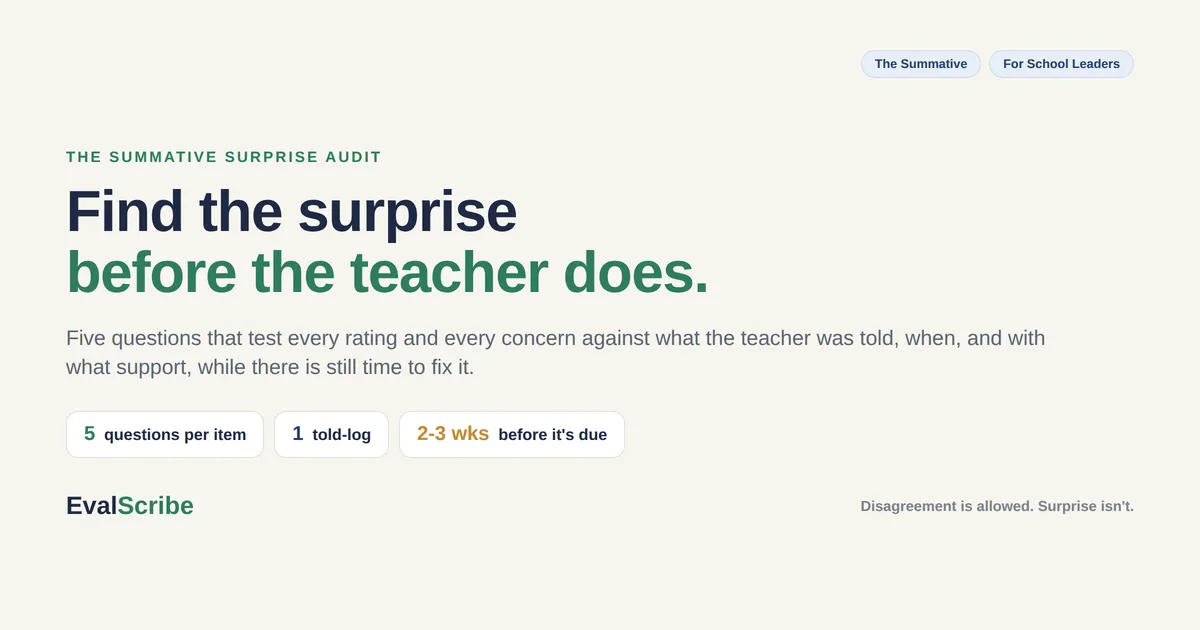
The Summative Surprise Audit: How to Check an Evaluation Before You Deliver It
 by: Anthony D. Neely, Ph.D.Published on: 07/10/2026
A pre-delivery check for school leaders: five questions that test every rating in a summative against what the teacher was told, and when.
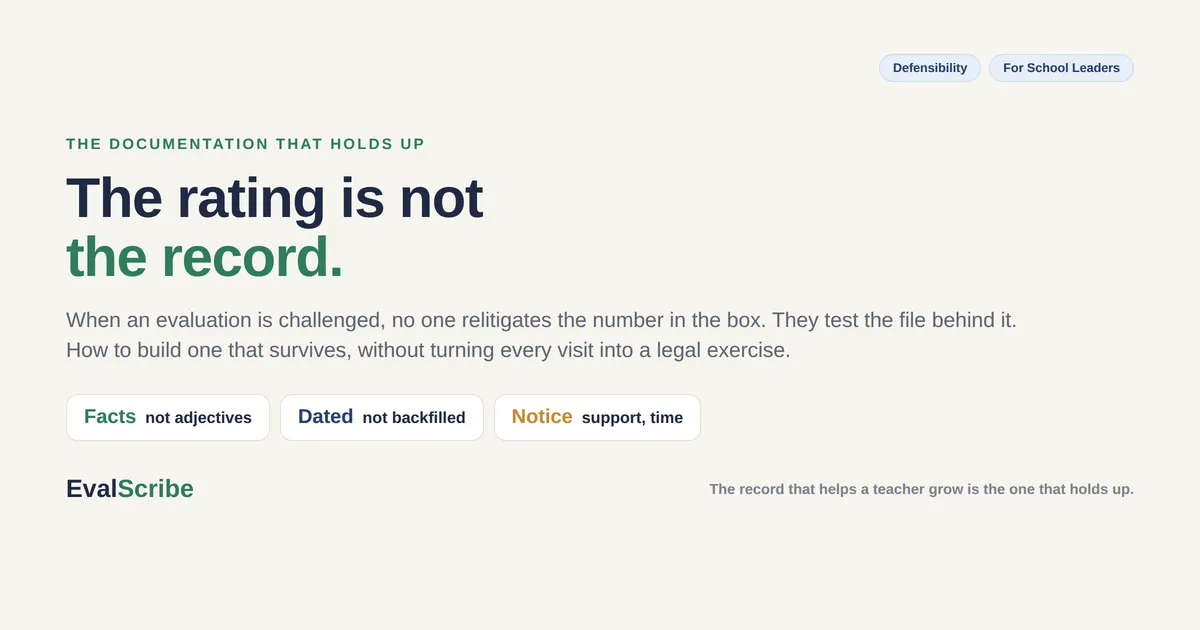
The Documentation That Holds Up: Building a Teacher-Evaluation Record That Survives a Challenge
by: Anthony D. Neely, Ph.D.Published on: 25/08/2026What makes a teacher-evaluation record survive a grievance, non-renewal, or due-process hearing: factual documentation, a real improvement plan, notice and time to improve, plus templates and checklists.
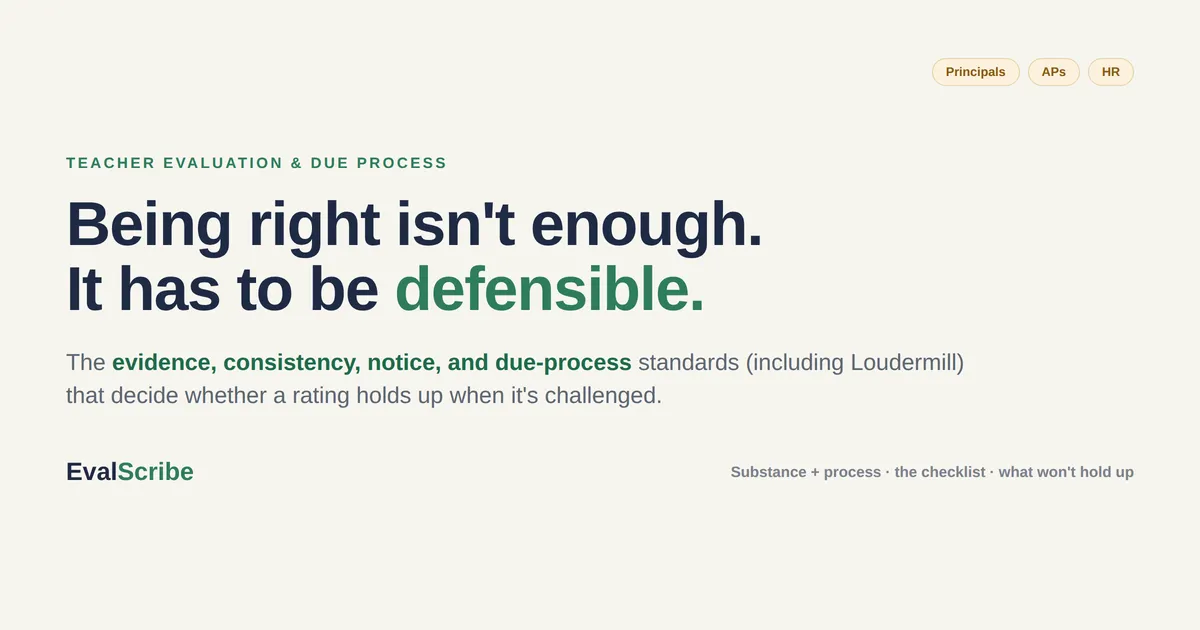
What Makes a Teacher Evaluation Legally Defensible?
by: Anthony D. Neely, Ph.D.Published on: 19/08/2026What makes a teacher evaluation legally defensible: the evidence, consistency, notice, documentation, and due-process standards (including Loudermill) that decide whether a rating holds up when challenged. A practical guide for
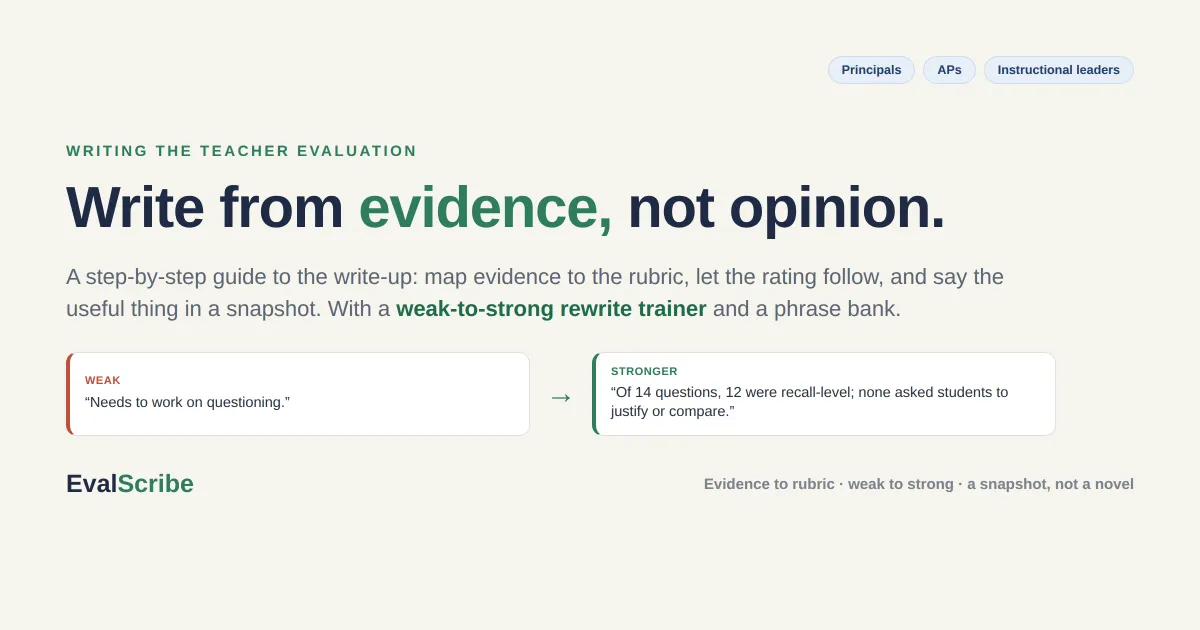
How to Write a Teacher Evaluation: A Step-by-Step Guide (With Examples)
by: Anthony D. Neely, Ph.D.Published on: 12/08/2026A step-by-step guide for principals and APs on writing a teacher evaluation from evidence: map notes to the rubric, let the rating follow, and write feedback teachers can act on. With before-and-after examples, a phrase bank, and a rewrite trainer.